 Sketchglass
Is tracing cheating? An honest answer, and how to use tracing to learn
Tracing is a practice tool, not a shortcut to fame. Here is where the line sits, and a routine that turns each traced drawing into a little more freehand skill.

In this guide
Tracing is not cheating when you use it to practise, to transfer your own sketch or photo, or for fun at home. It becomes a problem only when you trace someone else's art and say you drew it from scratch, or when a class or contest rule says no tracing. The best way to learn from tracing is to trace a drawing once, then redraw part of it without the guide.
Almost every beginner asks this question at some point, usually right after a friend says "you just traced that". It can sting. You held the pencil, you made every line, and the drawing on the paper is yours. So is tracing cheating, or is it a normal way to learn?
The honest answer is: it depends on what you do with the drawing and what you say about it. Tracing itself is a tool, like a ruler or a grid. This guide explains where the line sits, how to be fair about it, and how to use tracing so it actually builds your drawing skills instead of replacing them.
When tracing is completely fine
Most of the time, tracing is just practice. Here are the situations where nobody should call it cheating.
- Learning and practice. Following lines trains your hand to draw smooth curves and steady strokes. It also shows you how a picture is built from simple shapes.
- Your own sketches and photos. Many artists draw a rough sketch, then trace a clean version of it onto good paper. Tracing your own photo of your pet or your street is fair too, because the picture is yours.
- Drawing for fun. If you trace a cute dinosaur to put on your bedroom wall, there is no contest and nobody to fool. Enjoy it.
- Moving a design to a new surface. Transferring a drawing onto a card, a mug or a notebook cover is an everyday craft step.
Artists have used tracing and transfer tricks for a very long time. Grids, carbon paper, light boxes and projectors all exist because getting a design onto the page is a separate job from deciding what the design should be.
When tracing crosses the line
Tracing turns into a problem in only a few cases, and they all come down to honesty or rules.
- Passing off someone else's art as your own. If you trace another artist's drawing and post it as your original work, that is copying, and it is unfair to the person who drew it.
- Breaking the rules of a class or contest. If your teacher or a competition says "freehand only", tracing breaks the rules, even if the picture is yours.
- Selling traced art you do not own. Someone else's drawing belongs to them. Selling a tracing of it is not okay without permission.
Notice what is not on this list: practising at home, tracing sketches made for tracing, or tracing your own pictures. That is just drawing practice.
How to be honest about traced art
Being upfront is easy and nobody minds. A few habits help:
- Say "traced" or "traced from…" when you share a drawing that started as a tracing.
- Credit the original artist if the sketch was theirs.
- Keep the guide next to your result. Showing both side by side is honest and shows exactly what you added.
That last idea is built into Sketchglass. When you finish a drawing, the share card puts the original sketch next to a photo of your drawing, with your stars and a "Made with Sketchglass" line, so anyone can see how it was made.
How tracing helps you learn to draw
Tracing on its own will not turn you into an artist. Tracing followed by drawing without help is a different story. Here is a routine you can use with any tracing method, from tracing paper to a phone.
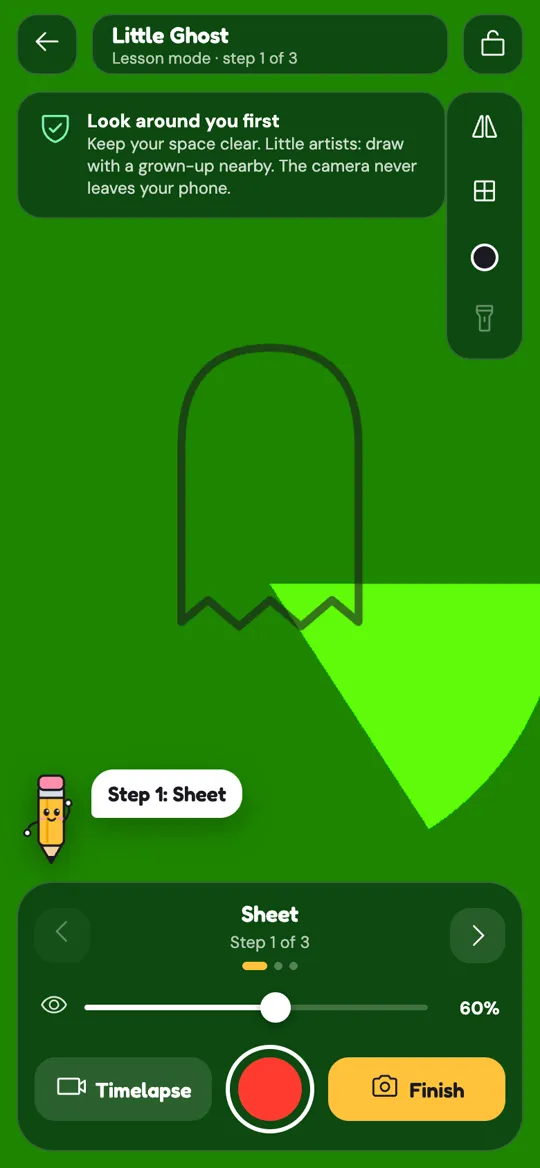
- Trace the whole drawing once. Go slowly and pay attention to the order: big shapes first, then details. In Sketchglass each sketch is split into a few steps, and Pip the pencil shows you which part comes next.
- Name the shapes you just drew. Was the head a circle? Was the body an oval? Saying it out loud makes the shapes easier to remember.
- Trace it again with a fainter guide. Turn the opacity down so you can barely see the sketch, and let your hand fill in more of the line on its own.
- Redraw one part freehand. Put the guide away and draw just the head, or just the ears, next to your tracing. Do not aim for perfect. Aim for the same shapes.
- Compare and repeat. Lay your freehand part next to the traced one. Spot one difference, then try that part once more.
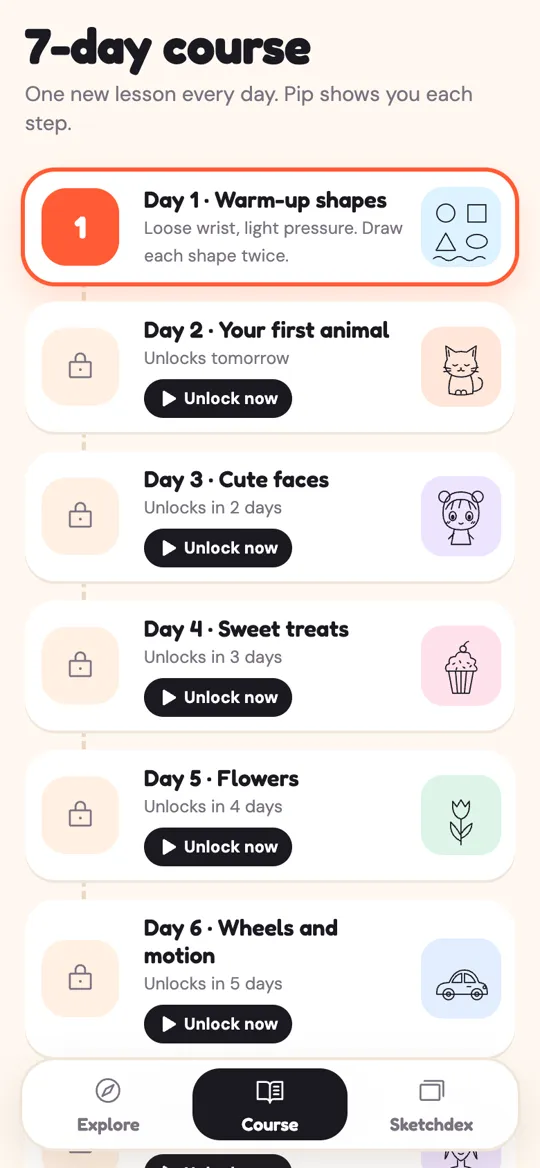
This is the same idea behind our 7-day drawing practice plan: trace for ten minutes, then redraw one part without help for three. Over a week, the freehand parts get bigger.
If you have never traced with a phone before, read how AR drawing works first. It covers the setup, so your practice time goes on drawing.
Tracing vs copying vs drawing from life
People often mix these up, so here is a quick way to tell them apart.
- Tracing means following lines that sit on or over your paper. It is the best way to train line control.
- Copying means looking at a picture next to your paper and drawing it by eye. It trains your eye to judge size and position.
- Drawing from life means drawing a real object in front of you, like a mug or your cat. It is the hardest, because nothing is flat or still.
A good path for a beginner is to move through all three. Trace a sleepy cat, then copy the same cat by eye, then try drawing a real cat when it naps. Each step uses what you learned in the one before.
Making your own tracing references
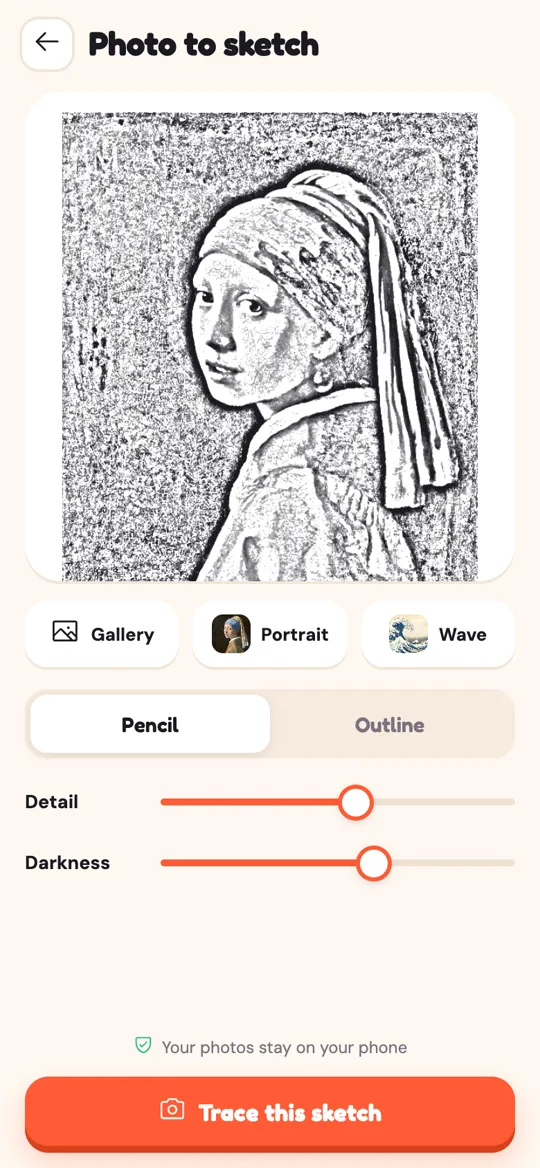
One of the fairest ways to trace is to start from a picture that is yours. Take a photo of your pet, your shoes or a plant on the windowsill, then turn it into simple line art and trace that.
Sketchglass has a photo to sketch tool for this. You pick a picture from your gallery, choose a pencil or outline look and adjust the detail and darkness, then trace it on real paper. The photo stays on your phone.
Once you have traced your own photo, try the freehand step from the routine above. Drawing your own pet from memory after tracing it once is a very satisfying moment. If you want a friendly first subject, our baby T-Rex tutorial walks through it shape by shape.
A note for parents and teachers
Children often feel embarrassed about tracing because someone told them it does not count. You can help by treating it as a normal step. Praise the steady lines, then ask them to draw one part again without the guide. That keeps the fun and adds the practice. Just check the rules for any school competition first, because some do ask for freehand work.
FAQ
Is tracing cheating if I am just practising?
No. Tracing for practice at home is a normal way to train your hand. It only becomes a problem if you claim a traced drawing is freehand, or if a class or contest rule bans it.
Is it okay to trace someone else's art?
It is fine for private practice, but do not post it as your own original work and do not sell it. If you share it, say it is traced and credit the artist who drew the original.
Can tracing really help me draw better?
It helps most when you mix it with drawing on your own. Trace a picture, then redraw one part without the guide. Doing both teaches your hand the lines and helps you remember the shapes.
Should I say my drawing was traced?
Yes, if you share it and it started as a tracing. A short note like "traced from a Sketchglass sketch" is enough. Being upfront means nobody can say you tried to fool them.
Is tracing with a phone app different from tracing paper?
The idea is the same: you follow lines with a real pencil. A phone app shows the sketch over your paper through the camera, so you can resize it and use any paper, while tracing paper needs a printed original at the right size.