 Sketchglass
AR tracing vs a light box vs tracing paper: which one should you use?
Three ways to get a picture onto your page. Here is how each one works, what it is good at, and a simple way to choose.
In this guide
Tracing paper is the cheapest way to trace but needs a printed original at the right size and leaves you with thin paper. A light box gives the cleanest lines on normal paper, but you need the box, a printout and paper thin enough for light to pass through. AR tracing uses your phone camera to show a sketch over any paper, notebook or sketchbook at any size, with no printing; the trade-off is drawing while you look at a screen.
All three methods do the same basic job: they show you where the lines go, and you draw them with your own hand. The difference is how the picture reaches your page, what you need to own, and what kind of paper you end up with.
If you have never tried phone tracing, our guide to what AR drawing is explains the idea in a few minutes. This article goes deeper on the comparison: each method on its own, then side by side, then a simple way to choose.
Tracing paper: the simple classic
Tracing paper is thin, see-through paper. You lay it over a picture, tape it down and draw over the lines you can see underneath.
What you need: tracing paper, tape, a pencil and a printed or drawn original.
Where it shines:
- It costs very little and works anywhere, with no power and no screen.
- It is easy to understand, which makes it a gentle first step for young artists.
- It is handy for copying your own rough sketch so you can redraw it neatly.
Where it struggles:
- The original must already be the size you want. Making it bigger or smaller means printing it again.
- Your finished drawing sits on thin, slightly see-through paper that does not take markers or paint well.
- Dark or busy pictures can be hard to see through the sheet.
Many people get around the thin-paper problem with a transfer trick. Here is how it works:
- Trace your picture onto tracing paper.
- Turn the sheet over and shade the back of the lines with a soft pencil.
- Flip it back, place it on your good paper and tape it down.
- Go over the lines again with firm pressure. The shading on the back leaves a faint copy on the paper below.
- Lift the sheet and darken the faint lines by hand.
It works well, but it means tracing the same picture twice.
A light box: clean lines on real paper
A light box (or light pad) is a flat panel that glows. You put your original on the panel, lay your drawing paper on top, and the light shines through both so you can see the lines clearly.
What you need: the light box, a power source, a printed original and paper thin enough to let light through. A sunny window is the free version: tape the original and your paper to the glass and trace standing up.
Where it shines:
- You trace straight onto normal drawing paper, so there is no transfer step.
- Lines are bright and sharp, which makes neat inking easy.
- Your eyes stay on the paper, which feels natural.
Where it struggles:
- You need the box and a printer, and the original must be printed at the size you want.
- Thick paper, card and most sketchbook pages block too much light.
- The tracing area is limited to the size of the panel.
AR tracing: the sketch floats over your page
AR (augmented reality) tracing turns your phone into the see-through layer. The camera films your paper, and the app draws a sketch on top of the live picture. You prop the phone above the page, place the sketch where you want it, lock it, then draw with a pencil while you watch the screen.
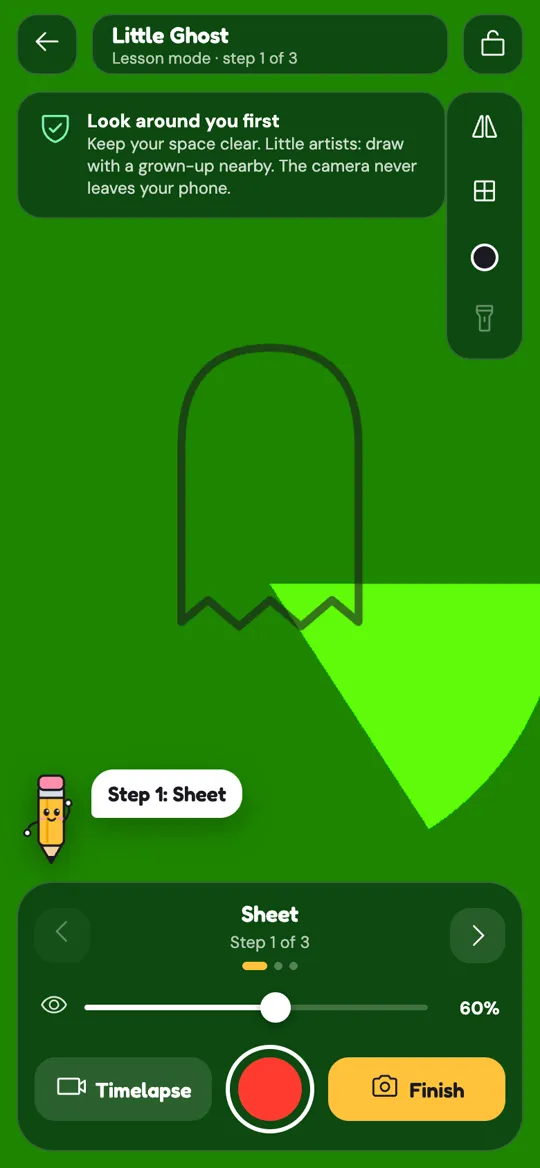
What you need: your phone, any paper and something steady to hold the phone up, such as a drinking glass or a stack of books about a hand above the page.
Where it shines:
- Any paper works: printer paper, coloured card, a notebook or a thick sketchbook page.
- You resize, move and turn the sketch with your fingers, so there is nothing to print.
- You can switch to a different picture in seconds.
- Tools help with tricky paper. In Sketchglass you can change the line colour to stand out against dark paper, turn the opacity down to see your own marks, add a grid, flip the sketch to mirror it and switch on the flashlight in a dim room.
Where it struggles:
- Drawing while you look at a screen takes a few minutes to get used to.
- If the phone or paper moves, the sketch no longer lines up. A steady stand and a bit of tape fix most of this, and our phone setup guide walks through it.
- It uses your phone's battery and needs decent light.
Side by side
Here is AR tracing vs light box vs tracing paper, question by question.
- Cheapest to start: tracing paper, or a window if you already have a printout. AR tracing is close behind if you already own a phone.
- Cleanest lines: a light box, because you look straight at bright lines on the paper itself.
- Works on thick paper and sketchbooks: AR tracing. Light boxes and tracing paper both struggle here.
- Changing size: AR tracing, since you pinch to resize. The other two need a new printout.
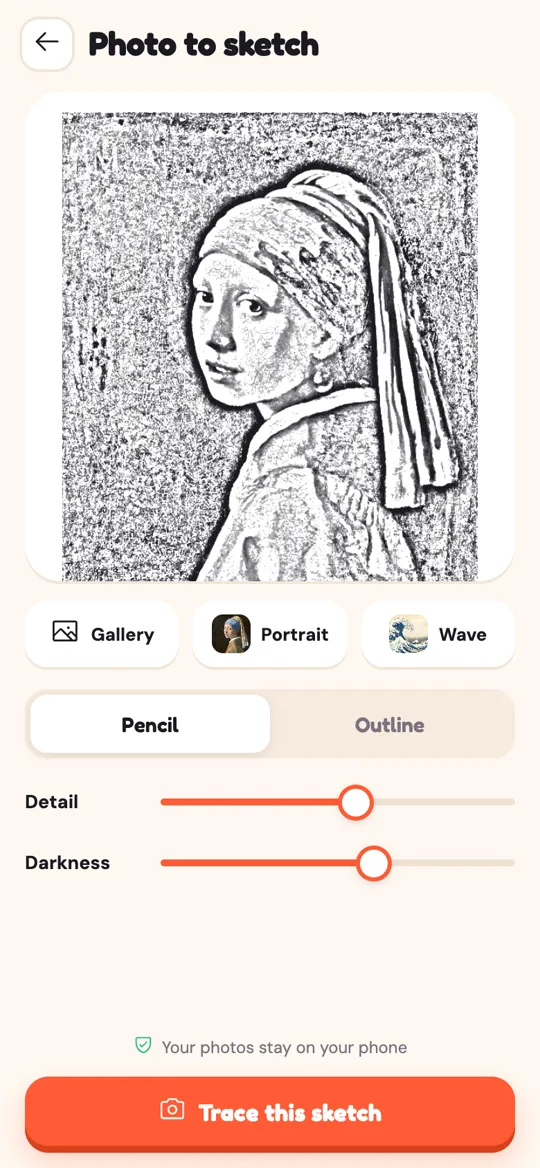
- No printer needed: AR tracing. With Sketchglass you can also turn a photo from your gallery into line art right on your phone.
- Feels most natural: a light box or tracing paper, because your eyes stay on the page.
- Portable: tracing paper and AR tracing both fit in a bag. Most light boxes do not.
How to choose your tracing method
Ask yourself these three questions in order.
- What paper do you want to end up with? If it is a sketchbook, card or thick paper, pick AR tracing. If it is thin printer paper, all three work.
- Do you have the picture printed at the right size? If yes, a light box or tracing paper is quick. If not, AR tracing saves you the printing.
- How will you finish it? If you plan to ink and colour a very neat final piece, a light box gives the crispest guide. For practice, quick doodles and trying lots of ideas, AR tracing is faster.
There is no wrong answer, and plenty of artists use more than one. Some sketch the rough idea with AR tracing, then move the best version to good paper on a light box for inking.
Whatever you pick, keep growing
Every method here is a stepping stone. Tracing teaches your hand smooth lines and good shapes, and the goal is to need the guide a little less each time. If you are worried that tracing does not count, read whether tracing is cheating. When you feel ready to let go, our guide on how to go from tracing to freehand gives you a gentle plan.
With AR tracing you can practise that step on purpose: turn the opacity down a little each time you redraw the same sketch, so the guide fades while your own lines take over.
FAQ
Is a light box better than tracing paper?
A light box lets you trace straight onto normal paper with bright, clear lines, so you skip the transfer step. Tracing paper is cheaper and needs no power, but your drawing ends up on thin paper unless you transfer it.
Can I use a window instead of a light box?
Yes. On a bright day, tape your original to the window and your paper on top, then trace. It works best with thin paper and is tiring for long sessions because you draw standing up on a vertical surface.
Does AR tracing work in a sketchbook?
Yes. The phone camera looks down at the page, so thickness does not matter. Keep the sketchbook flat and steady, and lock the sketch once it is in place.
Do I need a printer for AR tracing?
No. The sketch appears on your phone screen over the paper. In Sketchglass you can pick one of the built-in sketches or turn a photo from your gallery into line art, and the photo stays on your phone.
Which tracing method is best for kids?
Tracing paper is the simplest to explain. AR tracing adds a guided, step-by-step feel and works on any paper. Whichever you choose, keep the drawing space clear and sit with younger children while they set up.